McVries’s final surrender
The Long WalkMcVries’s final surrender is the moment when Peter McVries converts exhaustion into an act of deliberate refusal. After surviving the Long Walk’s accumulated violence, he stops trying to remain upright, sits cross-legged on the pavement, and accepts the consequence he has spent the event postponing. The scene’s decisive significance lies in its reversal: Garraty, who has repeatedly feared abandonment and death, becomes the one trying to keep another Walker alive, while McVries calmly rejects rescue. His surrender turns the warning system from a rule governing bodies into an instrument for breaking the last human bond between the two friends.
The Immediate Situation
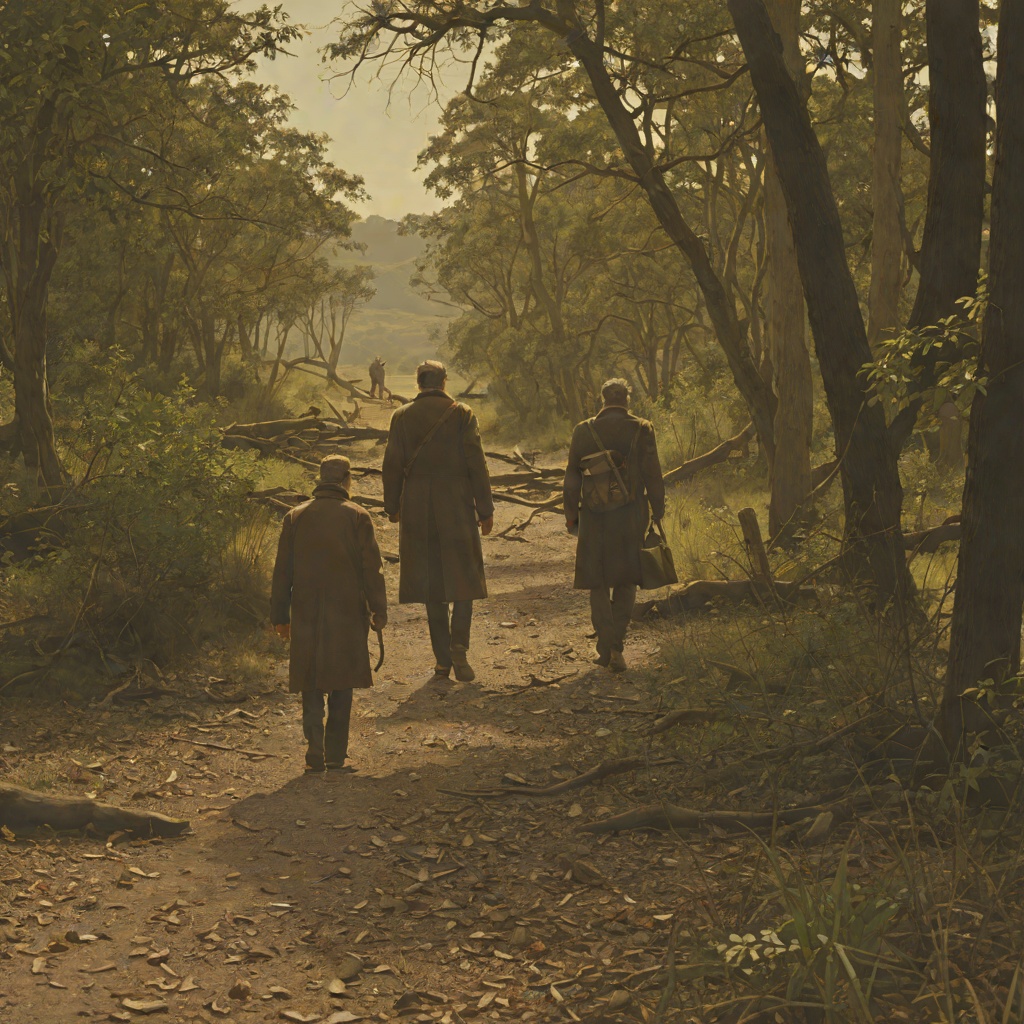
McVries’s surrender occurs after an extended passage in which the Walkers have been reduced by distance, weather, gunfire, and fatigue. The surrounding world has repeatedly presented death as organized spectacle: soldiers distribute high-energy concentrate pastes and canteens before the start; the Major’s hand finally drops at the appointed time; Curley is shot on the road after slowing; Travin is killed while suffering from diarrhea; Olson staggers onward with his intestines slipping through his fingers; and a solitary soldier later stands over Garraty with a chronometer in one hand and a rifle in the other. These episodes establish the system that McVries now confronts. The Walkers are supplied, timed, warned, watched, and killed under a procedure that treats survival as continued compliance.
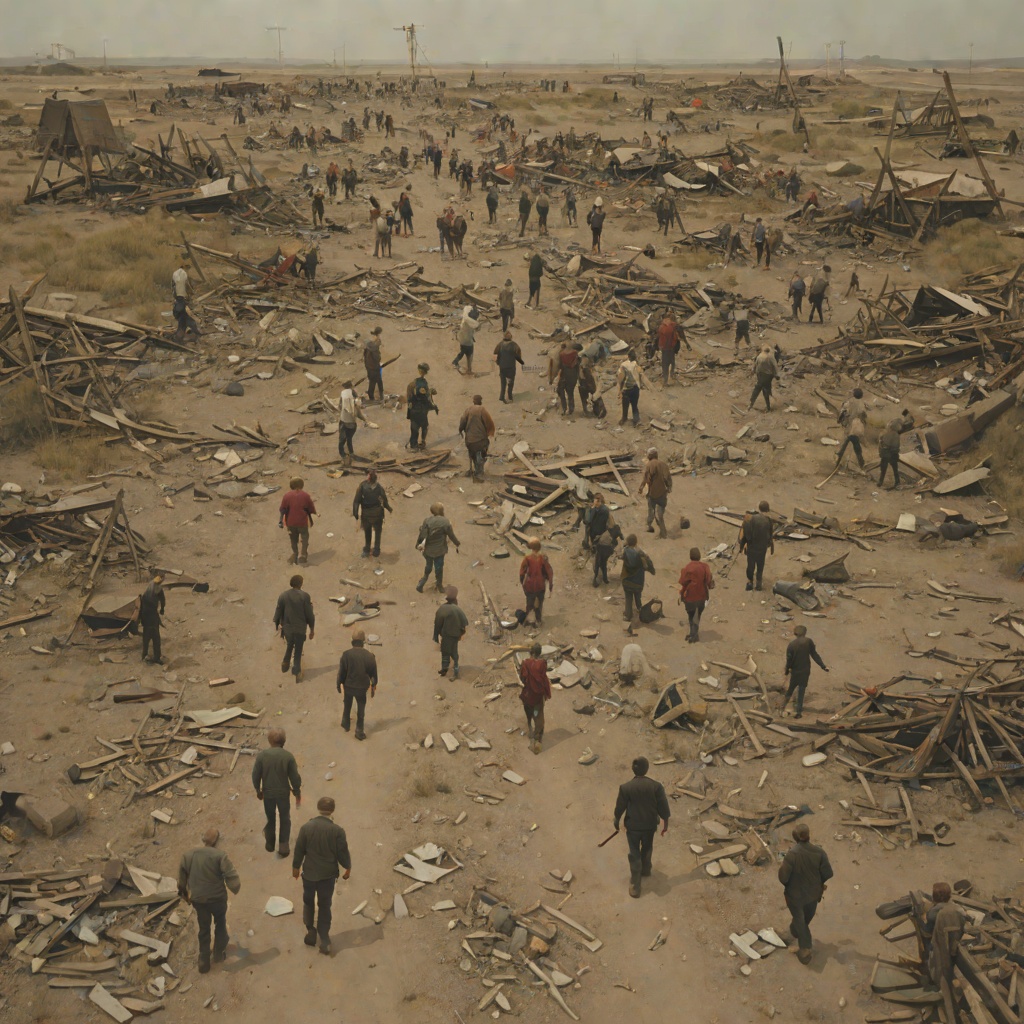
The Long Walk’s public ritual intensifies the pressure. The crossing into Limestone is marked by a city-limit sign welcoming the Walkers, while later ceremonies turn the route into a corridor of military display. At the Massachusetts crossing, the color guard holds rifles at high port along the ramp, and the soldiers’ polished uniforms contrast with the dusty halftrack carrying the active enforcement detail. The crossing into New Hampshire brings cannons, fireworks, competing brass bands, and an enormous crowd. By the time McVries falters, his private collapse is set against a public celebration that can absorb individual suffering as another feature of the Event.
The Act of Sitting Down
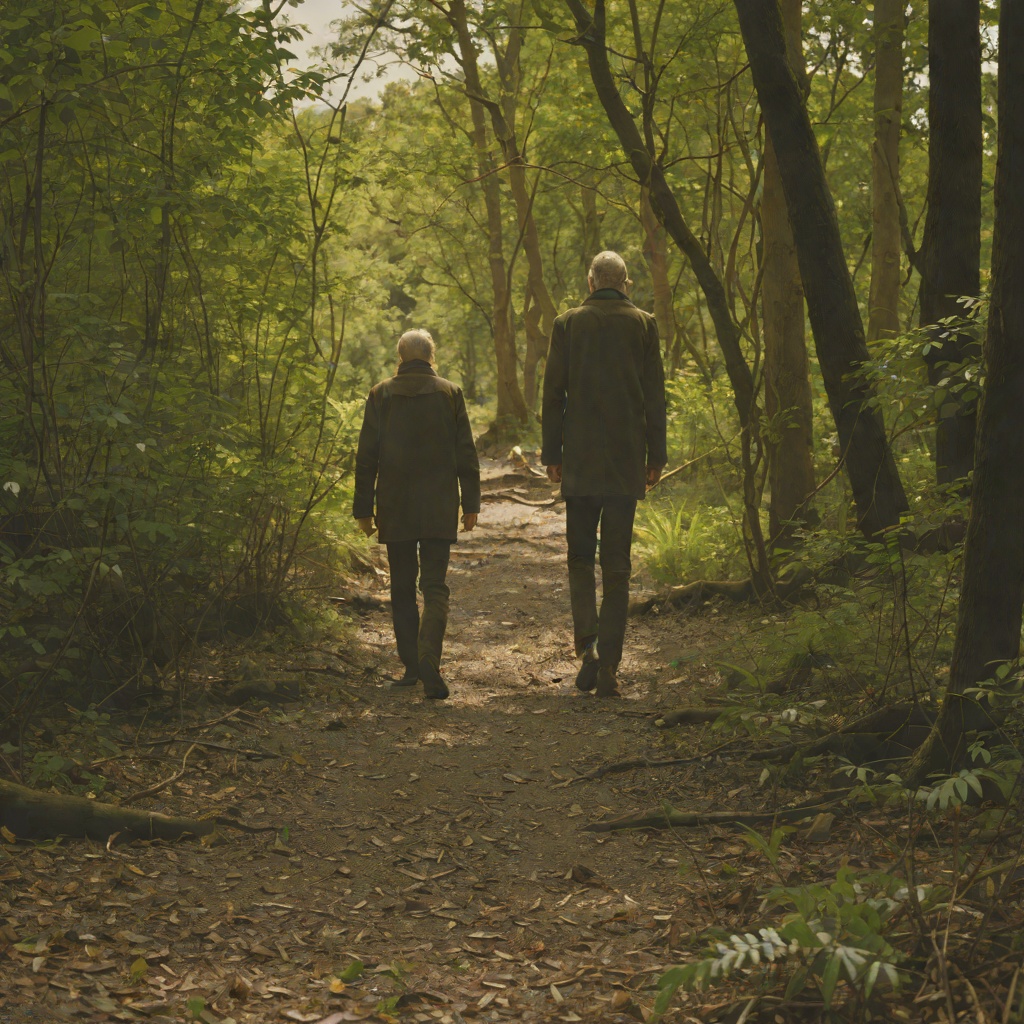
Garraty sees that McVries’s head has dropped and that he is walking toward the crowd, fast asleep. He calls to Peter and moves to his side, touching McVries’s shoulders to set him straight again. McVries looks up sleepily and smiles, then tells Garraty that it is time to sit down. The statement is not presented as a confused stumble or an accidental fall. It is the first clear sign that McVries has recognized his own limit and has chosen to stop contesting it.
McVries then sits cross-legged on the pavement. The posture makes him resemble a world-beaten monk, and the scar on his cheek appears as a white slash in the rainy gloom. The image is starkly different from the soldiers’ formal salutes and the crowd’s celebrations. Their gestures belong to ceremony and authority; his belongs to renunciation. He does not run, plead, or make a final attack. He simply withdraws his body from the movement that defines the Walk, turning stillness into the only remaining form of agency available to him.
Garraty’s Failed Rescue
Garraty responds with panic rather than acceptance. He tries to pick McVries up, but McVries is too heavy for him, even though he is thin, and McVries refuses to look at him. The physical failure matters because it strips Garraty’s loyalty of any power to change the outcome. Friendship can produce an attempt, but not an exemption. The rules recognize only movement, warnings, and death.
Two soldiers wrench McVries away from Garraty and put their guns to McVries’s head. Garraty begs them to shoot him instead, offering his own life as a substitute, but the soldiers do not honor the request. They give Garraty his third warning. This response exposes the system’s bureaucratic logic: even a direct plea for substitution is translated into another penalty against the person who intervenes. The state’s violence is not merely physical; it controls the available meanings of compassion, converting rescue into noncompliance and love into another warning.
The contrast recalls the earlier moment before the Walk began, when Garraty inwardly demanded that the Major start the Event and felt the hundred boys suspended beneath the raised hand. The waiting then was collective and anticipatory, but the same authority governed its release. At McVries’s surrender, the Major is absent from the immediate exchange, yet his system remains present through the soldiers’ chronometers, rifles, and warnings. The hand that once began the Walk has become an impersonal procedure capable of ending one Walker while forcing another to continue.
Death and Immediate Aftermath
McVries opens his eyes, smiles again, and disappears the next instant. The wording makes the death abrupt, but the emotional preparation is extensive. His final smile does not undo the horror of the soldiers’ intervention; it marks his last act as a person who can still choose how to meet the imposed ending. Garraty’s shouted offer fails, and the soldiers’ formal process prevails.
After McVries is gone, Garraty walks unknowingly. He stares blankly at Stebbins and experiences a strange, roaring emptiness. The loss is therefore not only the removal of a competitor. McVries had been Garraty’s most immediate companion and one of the few figures through whom the Walk could be spoken about as a human relationship rather than a sequence of numbers. His death leaves Garraty without the person who had shared his jokes, exhaustion, and mutual promises. Stebbins orders Garraty to finish the story, making narration itself part of the burden left by the dead Walker.
The aftermath is also part of a larger pattern of depersonalization. Curley’s death leaves Garraty thinking in the arithmetic of ninety-nine Walkers; the soldiers watch Travin’s bodily distress until his failure can be processed as a ticket; Olson’s ruined body is still expected to stagger in the direction of the Walk; and the blond soldier waits with a chronometer and rifle while Garraty’s own muscle fails. McVries’s surrender differs because he makes the transition from participant to corpse visibly and consciously, but the system ultimately records him in the same way: as one fewer body on the road.
Significance Within the Ending
McVries’s surrender is the emotional hinge between communal endurance and Garraty’s final isolation. Soon afterward Garraty reaches the point at which the crowd’s cheers fill the earth and fireworks fill the sky, while the Major arrives in a jeep, saluting and presenting the Prize as the fulfillment of every possible wish, including a death wish. The reward is thus placed directly after the destruction of the relationship that made continued walking bearable. The Event promises sovereignty to its survivor while first ensuring that survival is emptied of companionship.
The scene also clarifies the difference between physical endurance and meaningful freedom. McVries cannot change the Long Walk’s law, halt the soldiers, or save Garraty from continuing. Yet he can decide whether to keep presenting his body as obedient motion. His cross-legged posture briefly interrupts the spectacle’s rhythm, even though the system immediately absorbs that interruption through the third warning and the killing that follows. Surrender is therefore neither victory nor simple passivity. It is a final, limited assertion of personal will inside an institution designed to make every action appear to be only a rule-bound consequence.
For Garraty, the event produces a lasting fracture. He has wanted McVries to keep walking, tried to physically restore him to the route, and offered himself in exchange. When none of this works, Garraty enters the concluding stretch in a state of blankness rather than triumph. McVries’s final surrender consequently defines the Long Walk’s central moral reversal: the closer Garraty comes to the Prize, the less the victory resembles fulfillment, and the more it resembles movement continuing after the human reason for movement has been destroyed.